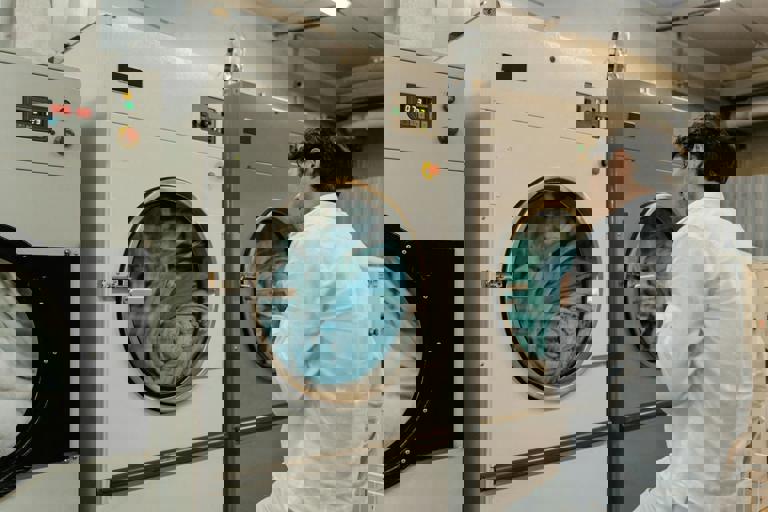
After serving Londoners faithfully since 1964, Millway Launderette in Camden has closed its doors for the last time, marking the end of an era for the city’s longest-standing laundry business. Tucked away on a bustling residential street, the family-run establishment washed its final load on Friday, leaving long-time patrons and neighbours nostalgic for rituals that became interwoven with daily life over six decades.
For much of north London, Millway Launderette was more than just a spot to clean clothes; it was a hub where friendships formed and stories were swapped, often over the hum and clatter of vintage washing machines. Many locals recall coming in as children, helping parents fold linen or chatting with Mrs Prasad, the matriarch who managed the shop since inheriting it in the late 1970s.
The closure comes after years of steadily rising rents and utility costs, compounded by the lingering impact of the pandemic and ever-increasing competition from at-home appliances. “We held out as long as we could,” said Ravi Prasad, the owner's son. “But when your electricity bill doubles and the developer buys the building, you just can’t keep going.”
According to data from the Coin Laundry Association in the UK, launderettes nationwide have been declining at a steady clip—down from nearly 12,000 in the 1980s to just over 3,000 today. London, once dotted with such establishments, now finds these fixtures disappearing from many neighbourhoods, replaced by convenience stores or upscale flats.
Generations of Londoners have relied on spaces like Millway Lauderette, especially those in small flats without their own washing facilities. Elderly residents, university students, and families on tight budgets all found both practicality and camaraderie beneath its neon sign. As resident Alice Marsh, 73, recounted, “It was like a second home. I’d see friends each Thursday. Now, we’ll all have to find new routines.”
For immigrants and newcomers to the city, launderettes have historically served as entry points to community life. They offered informal lessons in English, job tips, and a fleeting sense of belonging to those far from home. That legacy endures in the memories of people like Mohamed Al-Sayed, who arrived from Egypt in 1998. He described Millway as “where London first felt like home.”
The shop’s final week was a bittersweet procession of hugs, well wishes, and shared memories. Regulars brought homemade treats, pressed thank-you notes into staff hands, and lingered for one last cuppa at the back table. On the final day, the Prasad family handed out commemorative tote bags emblazoned with the launderette’s classic blue logo—a souvenir, and a farewell.
Local historian Fiona Quill noted how launderettes like Millway have featured in films and literature, symbolising the working-class resilience and multicultural spirit of London. “Their loss changes our urban landscape in subtle but profound ways,” Quill explained. “They are unique spaces where the city’s different generations and cultures once intersected.”
Not everyone, however, will miss the launderette life. Some younger residents, accustomed to in-home machines and on-demand laundry apps, see the closure as a sign of progress. Gina Mathews, who recently moved into a newly remodelled flat nearby, said, “Technology has changed our habits. But I respect what these places meant, even if I never really needed one myself.”
There is, nonetheless, concern among advocates for the city’s low-income and vulnerable residents. Charities like Age UK warn that for seniors and those on fixed incomes, losing affordable laundry options can translate to new hardships. “Not everyone has the means or space for a washing machine,” said spokesperson Linda Chow. “Launderettes still fill a critical role for many.”
The Prasad family, meanwhile, is adjusting to the end of their era with a mix of pride and sadness. After four decades of seven-day weeks, the siblings admit they’ll miss the routine. “There’s no retirement plan for launderette owners—just closing time,” Ravi Prasad joked, adding, “We’re grateful for every customer who walked through our doors.”
As the neighbourhood changes, speculation swirls over what comes next for the spot. The property has already attracted interest from a café chain and a developer planning luxury flats. Residents say they hope the new occupants will respect the building’s humble history, perhaps incorporating nods to Millway’s storied past.
Though the neon sign has dimmed, Millway Launderette’s memory endures in hundreds of stories and small acts of kindness. As the last load spun down and the shutters rolled closed, a chapter of communal London life ended—reminding us how even the humblest city fixtures can leave a lasting mark on the communities they serve.