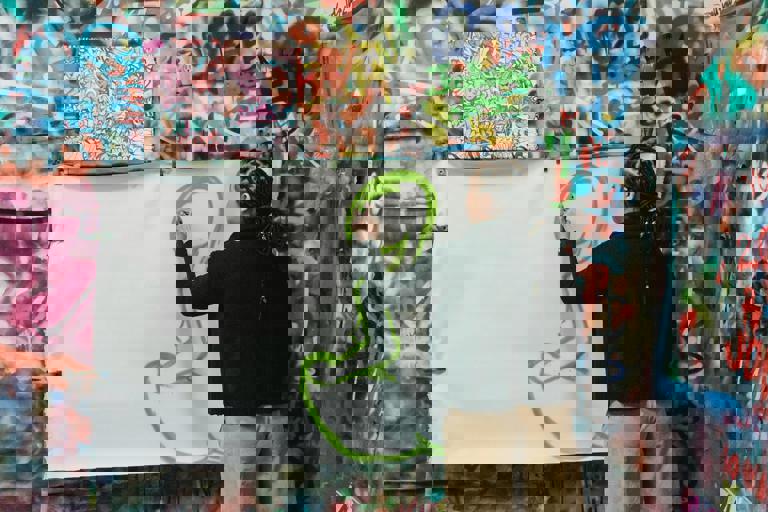
Last week, while renovating a renowned historic building in the city centre, construction workers made an extraordinary discovery beneath layers of old stone and brick. In what had appeared to be a sealed and forgotten basement, the crew stumbled upon a hidden underground workshop. This unexpected find quickly attracted the attention of local historians, conservation experts, and art lovers alike, all eager to piece together the story behind this enigmatic studio.
Within the concealed chamber, the walls were adorned with elaborate murals, each vividly painted and surprisingly well-preserved considering their age and secretive location. Authorities believe the artworks belong to a previously overlooked local artist from the early twentieth century, whose signature, "E. Maddox," appears on several of the compass motifs scattered across the walls. Art historians speculate that Maddox’s work represents a unique cultural intersection during a dynamic period in the city's artistic evolution.
Experts from the city’s heritage department were called in immediately to assess the site and ensure that the murals could be preserved properly. "This is a rare window into the city's past," commented Dr. Hannah Reeves, the department’s senior conservation officer. "We almost never come across such well-preserved, untouched works in their original setting—especially not by an artist so little known to the public." The department has temporarily halted all renovation work around the chamber to protect the integrity of the find.
Preliminary research into E. Maddox’s identity has yielded few concrete results, deepening the intrigue. Local archives list only a handful of references to an "Edith Maddox," a reclusive painter said to have lived nearby during the 1920s and 1930s. Art historian Professor Samuel O’Connor suggests that social constraints of the era may have led to her anonymity, with her gender possibly contributing to her lack of public recognition. Efforts are now underway to uncover more about her background and legacy.
The imagery within the murals is captivating, blending modernist influences with local folklore and urban landscapes that were familiar at the turn of the last century. Scenes depict bustling markets, shadowy figures on gas-lit streets, and mythical creatures that seem to emerge from the walls themselves. Each mural tells a story, and many include notes and sketches found on scraps tucked into the studio’s old shelving, hinting at Maddox's creative process.
Local schools and universities have already expressed interest in using the discovery as an educational tool. "It’s an exciting opportunity not only for art students but also for those interested in local history," said Caroline Ward, head of a nearby university’s fine arts programme. Plans are being discussed for tours, exhibitions, and even interactive workshops that would allow the public to engage directly with the preservation of the murals and the history of the area.
Community response to the discovery has been overwhelmingly positive, with many residents expressing pride and curiosity about the city’s hidden treasures. Social media has buzzed with photos and speculation, and local artists have started organizing mural walks, hoping to draw attention to other lesser-known art in the urban landscape. Some believe the find could usher in a resurgence of interest in public and outsider art, with lasting effects on cultural life in the city.
As conservationists continue their careful work, anticipation mounts over what future revelations the studio may hold. Further excavation might uncover more personal effects, original tools, or even written records from Maddox herself. For now, the hidden studio stands as a testament to the city’s layered past and the enduring power of art to captivate, surprise, and inspire those willing to look beneath the surface. The full story of the underground murals is only beginning to unfold.